Wellness, Without the Ceremony

Field Notes

Wellness, Without the Ceremony, by Suzanne Duckett

How hotels can integrate spa in a stay by Suzanne Duckett, Cultural and Wellness Specialist and Editor of Onolla London Magazine, living well in the city through wellness, food, art, community and culture.

Modern wellness on a hotel break has far more in common with food and beverage than most realise, yet they’re often treated like distant cousins. They share the same DNA. Both are priorities, wanted and valued. I’ve always argued that what’s offered in the spa is as important as what’s served in the bar and dining room, and now more than ever.

Family enjoying a swim in a serene rocky cove with distant mountains and clear blue skies.

Here’s why: they operate on identical principles. Neither is one-size-fits-all. Both demand nuance and personalisation at every step. And both thrive when ceremony steps back and natural harmony takes over.

Take a humble steak. How you want it cooked (rare, medium-rare, medium) is about tenderisation and personalisation in its purest, and literal, form. And a massage? The same conversation should and does normally exist. Yet in most spas, this question can feel like ceremony. A token gesture (as does ‘how is everything?’ when asked by an unengaged waiter, performing politeness rather than care) rather than the skilled, intuitive dialogue it should be. More on that later.

A joyful group of women in towels and sunglasses reading newspapers on a hotel bed.

Simplicity and Provenance

When you book a hotel for a weekend away, you’re drawn by location, interior, philosophy, what else you can do there. Food matters enormously. But you expect more now. Farm-to-table isn’t trendy; it’s baseline. It’s about having a sense of place, social and environmental respect and responsibility. It’s also about simplicity and curation in our overstimulated, overcomplicated world. Top-notch modern fine dining gets this. It’s still fine, still skilled, still serious, but it has ditched the stuffiness and po-faced formality and ceremony for ceremony’s sake.

The spa world needs the same reckoning. Provenance and simplicity rule the roost. Local therapists. Local brands. Integration with the landscape, the mood, the vibe. It’s thoughtful. A good wine list, after all, has global and local on offer. But now, what the locality offers is equally, perhaps even more, important. Supporting the local community, the planet, the people: this should be the foundation. It’s why we travel. For a sense of place.

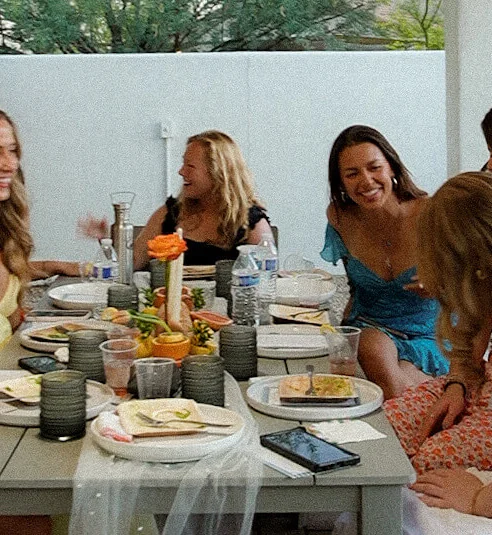
A family enjoying a joyful meal together outdoors, surrounded by nature and a beautifully set table.

The Flexibility Problem

But here’s what’s still lagging: flexibility. In food and beverage, hotels offer variety. Bar snacks. Fine dining. All-day brunch. Room service. Choice, whenever you want it.

Look at most spas, even today. They open at 9 AM, close at 5 PM. Fixed menu. Barely a request ahead. Rarely a true way to personalise the treatment itself. There’s an industry standard for steak (blue, rare, medium-rare, medium, well-done) and while there is a language for massage pressure, with steak, that standard means something. On the massage table? There is no real standard. What “medium” means to a therapist might feel light or heavy to me. My body might need something completely different. So when they ask “What pressure would you like?” there’s a problem, there’s no framework to fall back on and when face-down in a dimly lit room, practically naked, how do you ask for what you want? You can send an overcooked steak back. You can’t send back a treatment once it’s finished. There’s a vulnerability in the spa that doesn’t exist at the dining table. It requires real skill and intuition and more training in harmony than ceremony.

Some of the best treatments I’ve had are with therapists who, like great chefs, could personalise without throwing the rulebook out the window. They understood protocols exist for good reason, but they seasoned the experience to match my needs. That’s the difference between a technically good treatment and one where the therapist genuinely cared.

I know when a spa has got it the moment I walk in. It’s in how I’m greeted. There’s a script, but they improvise a little, ditching the ceremony so I don’t feel like a number. There’s ease in it. A ‘let’s get on with making this good for you’ feeling rather than a ‘let me perform wellness’ feeling. It’s the three P’s: personalisation, provenance, and personality. Their sense of self is firmly planted in what they offer, where they are. And then come those little surprises I wasn’t expecting, the moments that make you remember a place, and want to return.


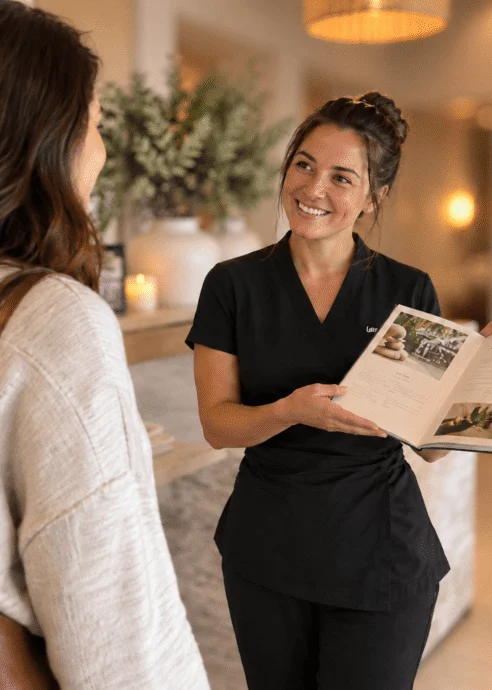
A cheerful staff member showing a brochure to a guest in a hotel's inviting lobby.

So are hotels taking their spa and wellbeing offering as seriously, creatively, and thoughtfully as they take their food and beverage offering? Not enough in my book and I am drawn to and tend to write about the ones that are. These, to me, are the places I feel we are worth our precious time and money. The kind of place where wellness doesn’t feel ceremonial or separate, where it’s woven in, flexible, intuitive, genuinely responsive to who you are and what works for you.

It shouldn’t be as rare as it is, right?

Suzanne Duckett, Cultural & Wellness Specialist and Editor, Onolla London Magazine.